A product house
A skin care line under one clear name.
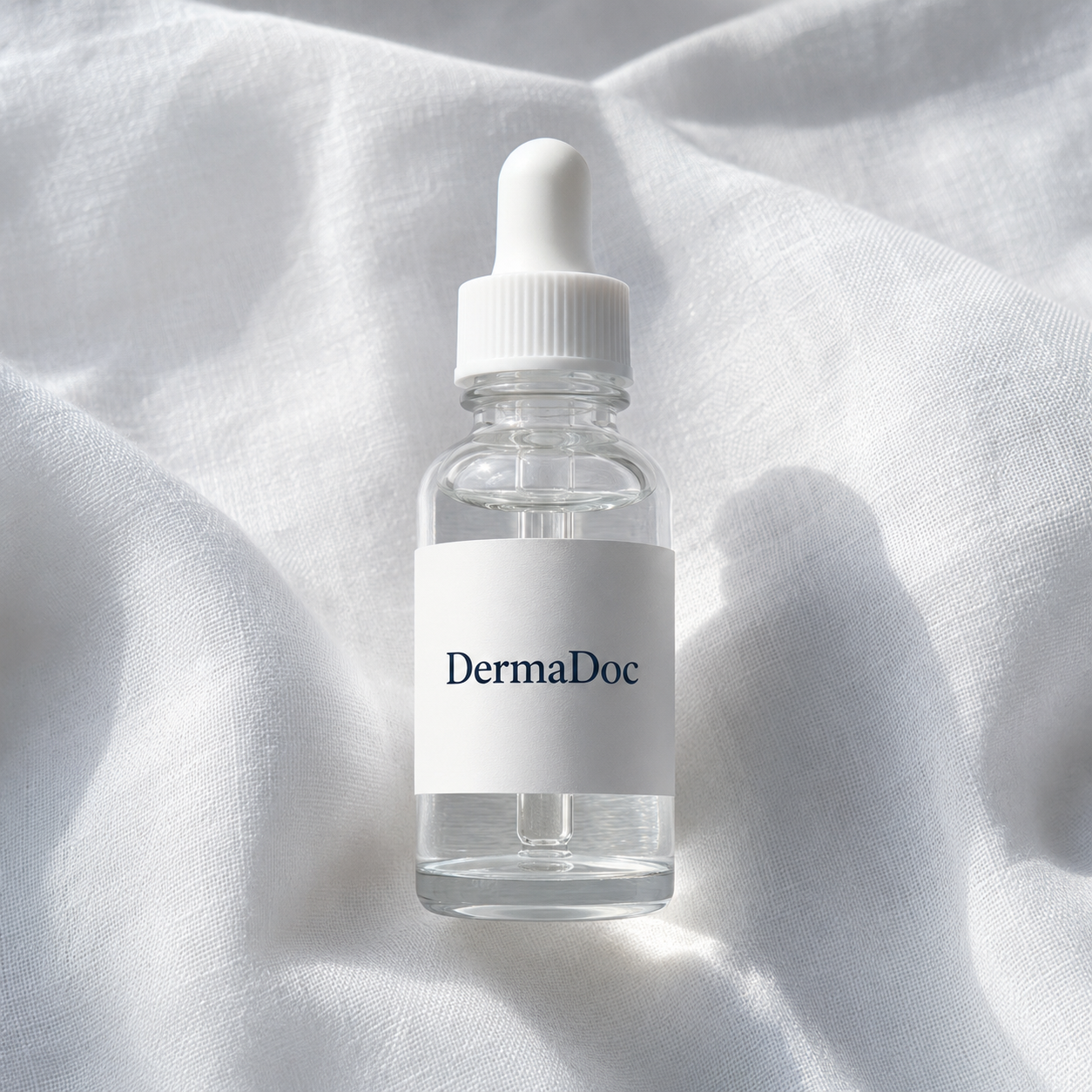
DermaDoc could be the front door to a serious skin care product company, but the opportunity is not another crowded shelf of nearly identical bottles. The stronger proposition is a product house that edits aggressively: a small system, a stated formulation standard, and enough education for a customer to understand what belongs in a routine. The name brings clinical association and instant category recognition. A buyer must earn that association through disciplined claims, responsible labeling, and products with distinct jobs.
Start with the regimen gap
Product founders often begin with an ingredient they admire or a format that photographs well. A more durable starting point is the customer’s unresolved routine. Perhaps people using prescription acne care need a gentle cleanser and dependable moisturizer. Perhaps frequent travelers want a compact barrier-care set with no mystery steps. Perhaps a professional channel needs a concise post-procedure range. Each is a different company. The chosen problem determines formula, packaging, price, channel, and the expertise the buyer must assemble.
DermaDoc has room for a cleanser, treatment, moisturizer, and sunscreen, but breadth should be earned. Launching twelve stock-keeping units creates inventory risk and makes the selection harder to explain. A three-product opening set can tell a complete story if each item has a clear role. One hero item may attract attention, while a pair of supporting products demonstrates how the brand thinks. The product names should be descriptive enough that a customer can rebuild the routine without consulting a diagram.
Let the label carry the argument
A credible package is an information surface. It identifies the product, net contents, directions, ingredient declaration, warnings, responsible company, and other required particulars. It also has to remain readable after the art director has finished. The FDA cosmetics overview is a necessary early reference for a United States launch, including the distinction between cosmetics and products whose intended use can cause them to be regulated as drugs. Qualified regulatory counsel should review the actual assortment and claims.
The visual language can be warm without pretending every bottle came from a pharmacy. Use a stable typographic hierarchy, clear formula or shade identifiers, and color only where it helps recognition. Avoid tiny pale copy that turns directions into decoration. Cartons and containers should survive bathroom handling, shipping, and photography. A good design review includes a damp hand, a low-light cabinet, a mobile product page, and the view from several feet away on a retail shelf.
Make proof product-specific
“Science-backed” is too vague to carry trust. The company should say what was tested, by whom, on how many participants, for how long, under what conditions, and what the result actually measured. Consumer perception, instrumental measurement, safety assessment, and clinical evaluation are not interchangeable. If the company has only conducted stability, compatibility, and safety work, it should not imply a clinical outcome study. Precise proof may sound less dramatic, but it is far more useful to a careful buyer.
Ingredient education should follow the same standard. Explain why an ingredient is present in this formula at an appropriate level of specificity. Do not turn every common emollient into a proprietary discovery. Suppliers, chemists, testing partners, and manufacturers should be identified internally, with documentation organized before purchase orders grow. The Personal Care Products Council provides industry resources that can help a founder understand the wider compliance and safety context.
Sell a system without forcing a subscription
The DermaDoc store could organize products by routine role rather than invented collections. A customer should be able to shop Cleanse, Treat, Moisturize, and Protect, compare sizes, and see where a product may conflict with a current regimen. Routine builders can be useful if they produce a small, explainable recommendation and admit when a clinician should answer the question. The business earns a repeat order by making the product valuable, not by making cancellation difficult.
Bundles should reflect real usage rates. If a cleanser lasts twice as long as a treatment, automatically replenishing both together creates waste and frustration. Purchase data, support questions, returns, and reviews can reveal where instructions or pack sizes are wrong. Customer service belongs close to product development because it hears the gap between the intended experience and bathroom reality. The house should publish clear shipping, return, adverse-event, and contact procedures before paid acquisition begins.
Give each channel a reason to care
A direct site provides education, margin, and first-party learning. Professional partners may provide trusted introduction and richer feedback. Select retail can provide discovery. These channels need compatible pricing and distinct support, not conflicting promises. A clinic starter set might include staff education and patient handouts. The direct customer might receive a short routine card and timed usage guidance. A retailer needs fast recognition and packaging that explains the difference without a founder standing nearby.
The domain strengthens all three. DermaDoc.com is easy to print on the base of a bottle, repeat during a consultation, and recall after seeing a sample. It gives campaigns and new releases one permanent destination. More importantly, it lets the product company own its explanation. Marketplace listings compress nuance. A well-built brand site can maintain formula details, usage instructions, test summaries, frequently asked questions, and batch or packaging updates in one controlled location.
The acquisition case
A buyer should price the domain as part of a longer brand investment, beside formulation, testing, packaging tooling, photography, working inventory, and customer acquisition. The name will not repair weak unit economics or an undifferentiated formula. It can reduce the ongoing tax of a forgettable address and give a tightly edited assortment a credible roof. That value compounds each time a customer turns a bottle around, recommends the line, or returns for instructions.
The best DermaDoc product house would feel like an informed editor in a noisy category. It would release slowly, explain specifically, and retire products that no longer justify their place. Its public confidence would come from the quality of the assortment and the accuracy of its information. For a founder with formulation access, regulatory discipline, and a real distribution thesis, DermaDoc.com is a memorable commercial asset ready to be attached to products that merit repeat use.